
Prompting: the new language of AI
INSPYR Global Solutions, Industry News, Technical Blog

Artificial Intelligence has changed the way we interact with technology.
For decades, communicating with computers required learning programming languages with strict syntax, predefined structures, and precise instructions. Today, thanks to generative AI, we can accomplish many of the same tasks simply by using natural language.
This shift raises an interesting question:
Is prompting becoming a new language for interacting with AI?
At INSPYR Global Solutions (IGS), we see prompting as much more than typing instructions into an AI tool. It represents a new way of communicating with technology—one that combines technical knowledge, critical thinking, and clear communication to achieve better outcomes.
From programming languages to natural language
Traditionally, software development has relied on programming languages such as C#, Java, or Python.
These languages follow well-defined rules, syntax, and logical structures that computers can execute consistently.
Prompting works differently.
Instead of writing code, we describe what we want AI to accomplish using natural language. The AI then interprets those instructions and generates an appropriate response, whether that is code, documentation, designs, or other types of content.
While this makes technology more accessible, it also introduces a new challenge.
The quality of the output depends heavily on the quality of the instructions.
Why prompts matter
A vague prompt often produces vague results.
An incomplete prompt usually requires multiple revisions.
Many people solve this by continuously refining their requests, adding new instructions each time until they eventually reach the desired outcome. This iterative process is commonly known as vibe coding.
Although effective for experimentation, it can also generate inconsistent solutions, unnecessary complexity, and results that become difficult to maintain or reproduce.
That is why writing better prompts has become an increasingly valuable professional skill.
Structured prompting
Just as programming languages follow structure and conventions, prompting also benefits from organization.
Frameworks help users communicate more effectively with AI by reducing ambiguity and clearly defining expectations.
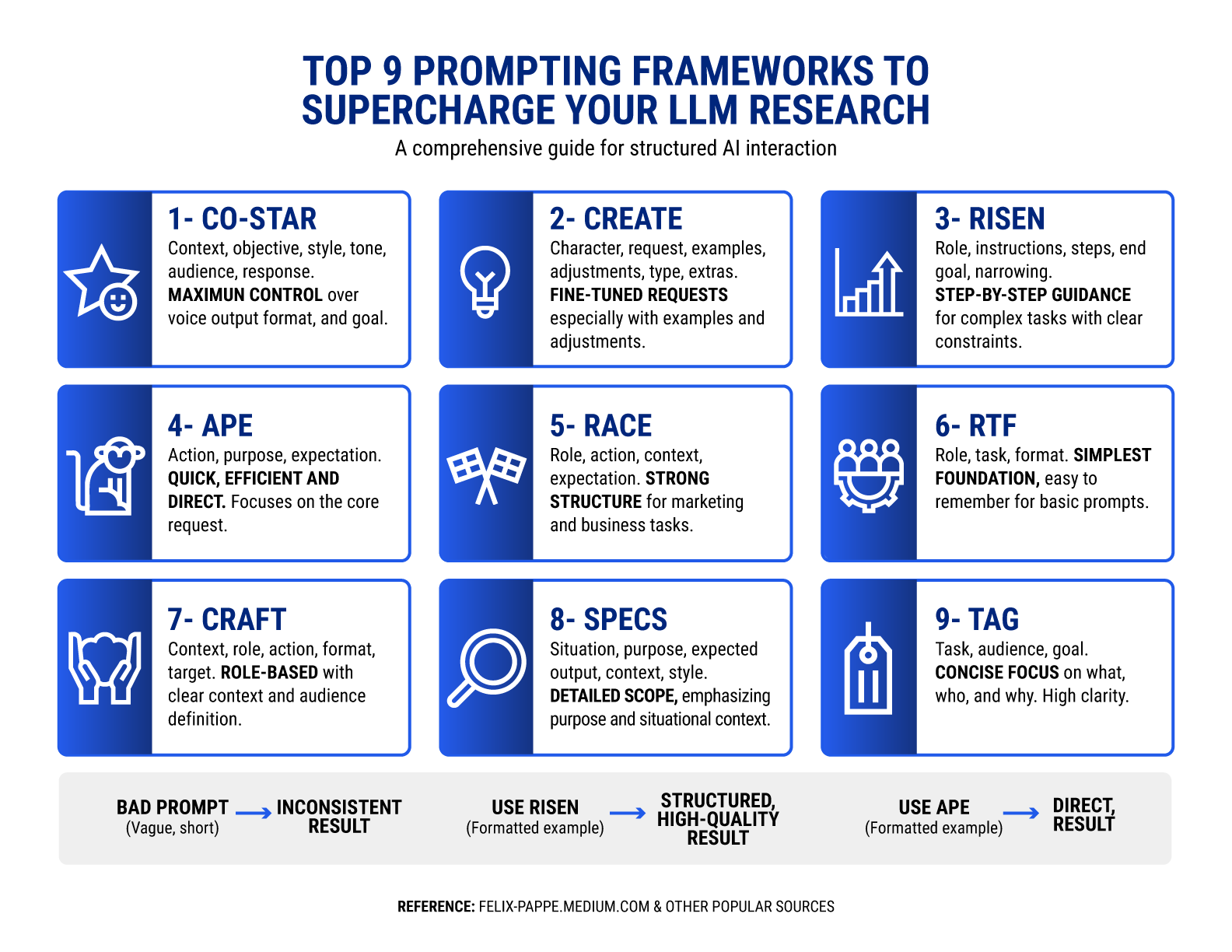
One example is the APE framework:
- Action – Define the specific task the AI should perform.
- Purpose – Explain why the task is being performed and what objective it should achieve.
- Expectation – Describe how the final output should be delivered.
Instead of asking AI to simply “build a website,” a structured prompt provides context, objectives, constraints, and expected results.
A practical example
Imagine we want AI to build a simple web application that calculates the sum of all numbers within a user-defined range.
A basic prompt such as:
“Create a website that calculates the sum of numbers.”
AI will probably generate a working solution, but many implementation details are left to interpretation.
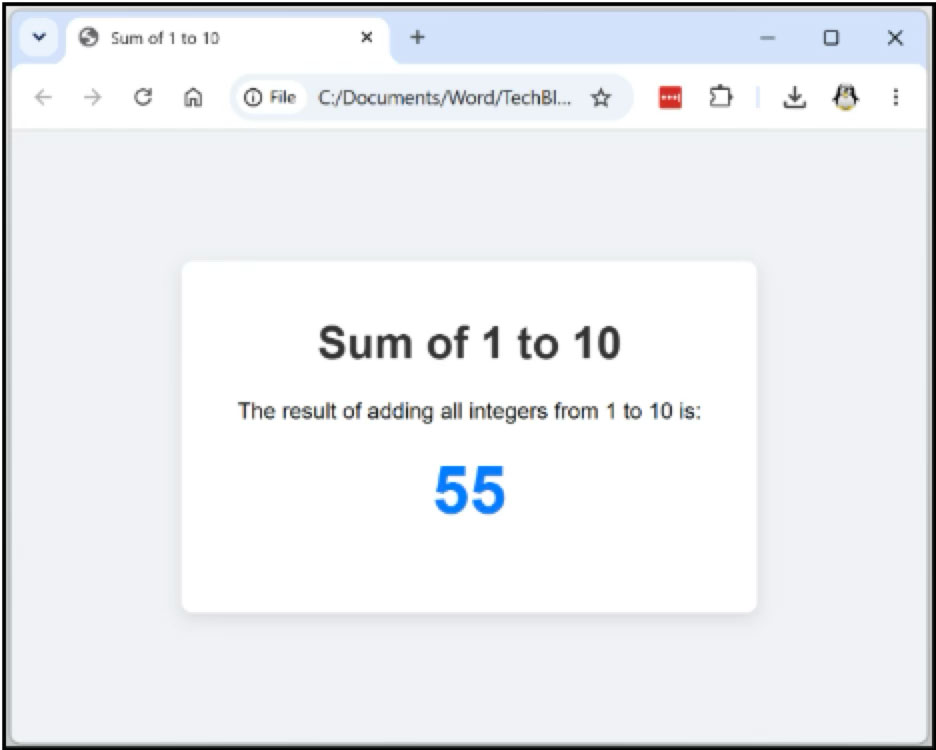
While functional, this prompt does not specify important aspects such as the user interface, how the information should be presented, code organization, responsiveness, or documentation.
Now let’s apply the same exercise using the APE framework.
|
APE Element |
Example |
|
Action |
Act as an experienced web developer and create a complete web application in a single HTML file. |
|
Purpose |
Allow users to enter two numbers and calculate the sum of all integers within that range. |
|
Expectation |
Deliver clean, responsive, well-commented code with a professional interface and a clear results section. |
Complete prompt
As an experienced web developer, write the complete code in a single file (index.html, containing HTML, CSS, and JavaScript) for a simple web application. The application’s main objective is to allow users to calculate the sum of all integers between two numbers entered by the user. When the user clicks a button, the application should calculate the result and display it clearly. Deliver clean, responsive, well-commented code with a professional interface, a clear Calculate button, and a prominent area to display the result.
This prompt provides the AI with clear context, objectives, and expectations, significantly reducing ambiguity.
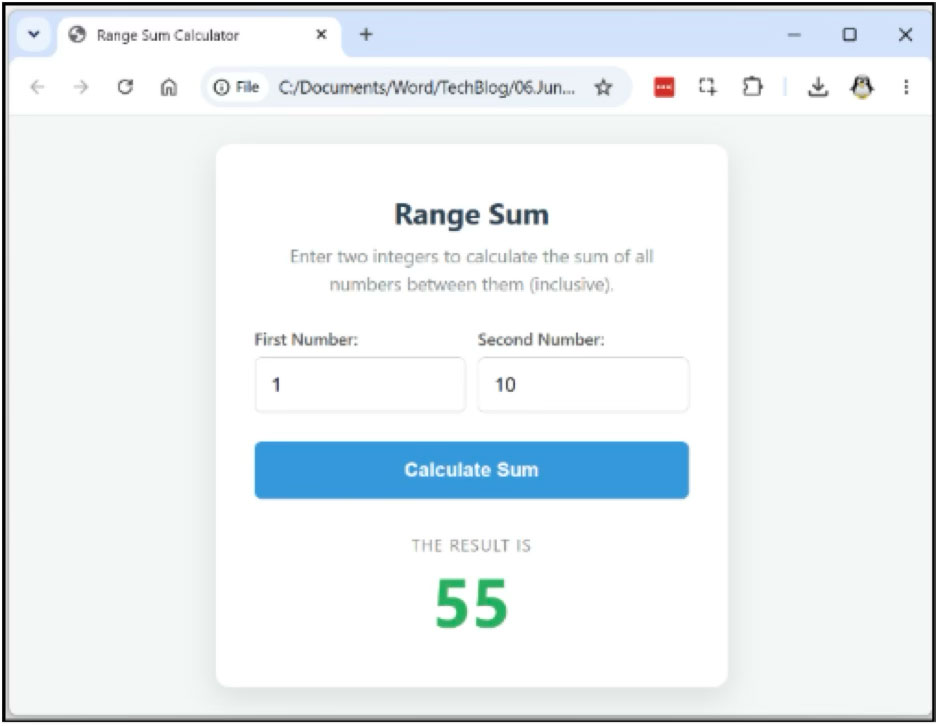
Using a structured prompt does not guarantee a perfect result, but it significantly reduces ambiguity and produces outputs that are much closer to the original objective with fewer iterations. The difference is often reflected in the quality, consistency, and usability of the generated output.
A new professional skill
Prompting should not be viewed as a replacement for programming.
Rather, it is becoming a complementary skill that enables professionals to collaborate more effectively with AI.
Developers still need software engineering principles, architectural thinking, security awareness, and business knowledge to evaluate, improve, and maintain AI-generated solutions.
Likewise, professionals outside software development can use structured prompting to increase productivity, automate repetitive work, generate ideas, and solve problems more efficiently.
The better we communicate with AI, the better AI can support our work.
So, is prompting a new language?
Not exactly.
Programming languages tell computers precisely what to execute.
Prompting creates a structured conversation between humans and artificial intelligence, helping AI better understand our intent while reducing ambiguity.
It represents a new communication paradigm—one that combines natural language with structured thinking.
At IGS, we believe mastering AI is not only about learning new tools. It is about learning new ways of thinking, communicating, and solving problems.
As AI continues to evolve, professionals who can combine technical expertise with effective prompting will be better equipped to innovate, collaborate, and create meaningful impact.
If you’re passionate about emerging technologies, continuous learning, and shaping the future of AI-powered innovation, explore opportunities IGS.

Julio Cesar Robles Uribe
Julio Cesar Robles Uribe is a Solutions Architect at INSPYR Global Solutions with over 30 years of experience in software development across industries such as banking, healthcare, and e-commerce. He has also taught as a university professor for more than 15 years and enjoys sharing knowledge. In his free time, he likes exploring new technologies and spending time outdoors.
Share This Article
Contact Us
We’re here for you when you need us. How can we help you today?