
What IT Professionals Should Know About Responsible AI
Employee Insights, Industry News, Job Seekers
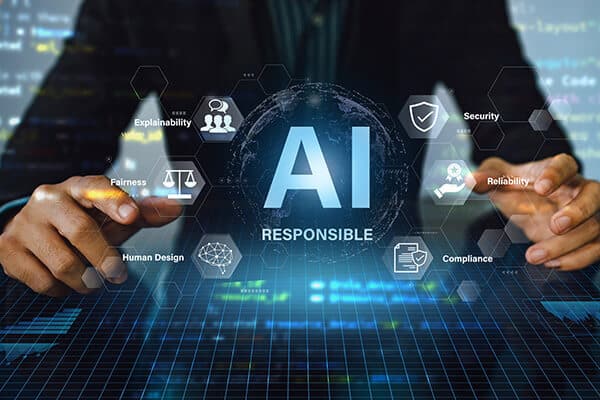
As AI is increasingly featured in applications, platforms, workflows, and more, the idea of responsible AI is becoming more than just a policy concern; it should directly impact how software is designed, deployed, and maintained. For developers and other IT professionals, responsible AI and understanding the fundamentals of AI ethics, bias, security, and governance have become a core part of building reliable and trustworthy systems. Here are some things you should keep in mind:
Understanding AI Ethics in Practice
AI ethics focuses on ensuring that systems are fair, transparent, and aligned with human values. For tech professionals, this translates into practical decisions made during development. This includes thinking about how data is used, whether outputs could cause harm, and how systems might impact different groups of users. Most importantly, ethical considerations should not be an afterthought. They should be part of design discussions, model selection, and testing processes from the beginning.
Recognizing and Mitigating Bias
Bias is one of the most significant risks in AI systems, so awareness is important when it comes to responsible AI practices. For example, models trained on incomplete or unbalanced data can produce skewed or unfair outcomes. This is why it’s important to understand how bias can enter a system through training data, feature selection, or model design. Mitigation strategies include using diverse datasets, testing outputs across different scenarios, and continuously monitoring for unintended patterns. Addressing bias is not a one-time task. It requires ongoing evaluation as systems change.
Managing Security Risks in AI Systems
AI introduces new security challenges alongside traditional application risks. These include data poisoning, model manipulation, prompt injection, and unauthorized access to sensitive data. This is why AI systems should be treated as part of the broader security surface, which means taking measures such as implementing secure data handling practices, validating inputs, restricting access to models and APIs, and monitoring for unusual activity. Security reviews and testing should extend to AI components just as they do for any other part of an application.
Transparency and Explainability
Many AI systems, especially those based on complex models, can be difficult to interpret. However, stakeholders may need to understand how decisions are made. Developers should aim to build systems that provide clear outputs, traceable logic where possible, and meaningful explanations for results. Even when full explainability is not achievable, documenting assumptions and limitations helps build trust with users and stakeholders.
Governance and Accountability
Responsible AI requires clear governance frameworks that define how systems are developed, deployed, and monitored. Developers play a key role in supporting these frameworks through documentation, testing, and adherence to standards. This includes establishing guidelines for data usage, defining approval processes for AI deployments, and creating mechanisms for auditing system behavior. Accountability ensures that when issues arise, they can be identified and addressed quickly.
Human Oversight Remains Critical
Even as AI systems become more advanced, human oversight remains essential. Tech professionals at every layer of development should design systems with checkpoints that allow for human review, especially in high-risk scenarios. AI should support decision-making, not operate without accountability. Ensuring that humans remain involved in critical workflows helps reduce risk and maintain control over outcomes.
Building Responsible AI Into Your Workflow
For most tech professionals, responsible AI does not require a complete overhaul of existing practices. Instead, it involves integrating new considerations into familiar workflows. This can include reviewing datasets for quality, validating model outputs, incorporating security checks, and documenting system behavior. Small, consistent steps can significantly improve the reliability and trustworthiness of AI-powered applications.
Ready to Make an Impact?
Are you an AI developer looking to take the next step in your career? Check out our current opportunities and apply today!

Share This Article
Contact Us
We’re here for you when you need us. How can we help you today?